
HDPE Pipes Supplier in Argentina Reliable Solutions from Stark Industries
Introduction
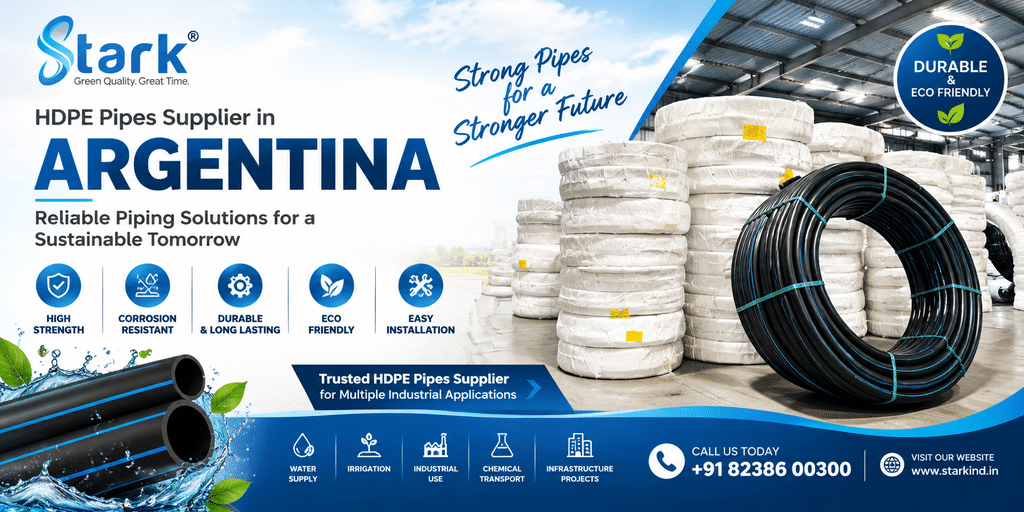
Established in 2019, Stark Industries is a manufacturer, supplier and exporter of high-quality piping and hose solutions from Rajkot, Gujarat.
HDPE pipes are widely used in modern piping systems because of their durability, flexibility, lightweight structure, and resistance to corrosion. HDPE stands for High-Density Polyethene, a strong thermoplastic material used for transporting water and other compatible fluids. These pipes are suitable for various applications, including agriculture, irrigation, water distribution, industrial projects, mining, and infrastructure development.
If you are searching for a reliable HDPE Pipes Supplier in Argentina, choosing the right supplier is important for ensuring product quality, long-term performance, and smooth project execution. High-quality HDPE pipes can help reduce leakage risks, simplify installation, and support efficient fluid transportation.
Stark Industries is committed to providing practical piping solutions for customers seeking dependable industrial products. Businesses, contractors, distributors, and project developers looking for HDPE pipe solutions can connect with Stark Industries to discuss their requirements and explore suitable products.
What Are HDPE Pipes
HDPE pipes are manufactured from high-density polyethene, a material known for its strength, flexibility, and chemical resistance. They are designed for different piping applications depending on their pressure rating, diameter, wall thickness, and material grade.
One of the main advantages of HDPE pipes is their resistance to corrosion. Unlike many traditional metal pipes, they do not rust when exposed to moisture. Their lightweight structure also makes transportation and installation easier when compared with some conventional piping materials.
HDPE pipes are available in different sizes and pressure classes to meet specific installation requirements. Some systems use heat-fusion joining methods to create strong, continuous connections with reduced leakage risks when properly installed.
Types of HDPE Pipes
1. HDPE Water Supply Pipes
HDPE water supply pipes are designed to transport drinking water and general-purpose water from one location to another. They are commonly used in municipal water distribution networks, residential projects, commercial buildings, and public infrastructure.
- Municipal water supply systems
- Residential and commercial water connections
- Water distribution networks
- Infrastructure development projects
2. HDPE Irrigation Pipes
HDPE irrigation pipes are used to supply water to farms, gardens, plantations, and agricultural fields. They help distribute water efficiently and are suitable for different irrigation layouts.
- Drip irrigation systems
- Sprinkler irrigation systems
- Agricultural water distribution
- Greenhouse irrigation
- Horticulture and landscaping
3. HDPE Drainage Pipes
HDPE drainage pipes are used to carry wastewater, rainwater, and other drainage flows. Depending on their design, they may be manufactured as solid-wall or structured-wall pipes.
- Stormwater drainage
- Industrial wastewater drainage
- Underground drainage networks
- Commercial and residential projects
4. HDPE Gas Distribution Pipes
HDPE gas pipes are specially designed for approved gas distribution applications. They are manufactured to meet applicable material, pressure, and safety requirements.
- Natural gas distribution networks
- Underground gas pipelines
- Approved utility infrastructure
- Residential and commercial gas distribution
5. HDPE Industrial Pipes
HDPE industrial pipes are used in factories, processing plants, and industrial facilities where suitable chemical resistance and reliable fluid transportation are required.
- Industrial water transportation
- Chemical processing systems
- Manufacturing facilities
- Wastewater treatment plants
6. HDPE Pressure Pipes
HDPE pressure pipes are designed to carry fluids under specified internal pressure. Their pressure capacity depends on factors such as the material grade, pipe dimensions, wall thickness, and operating temperature.
- Pressurised water supply
- Industrial pumping systems
- Irrigation networks
- Water treatment facilities
Applications of HDPE Pipes
1. Water Supply and Distribution
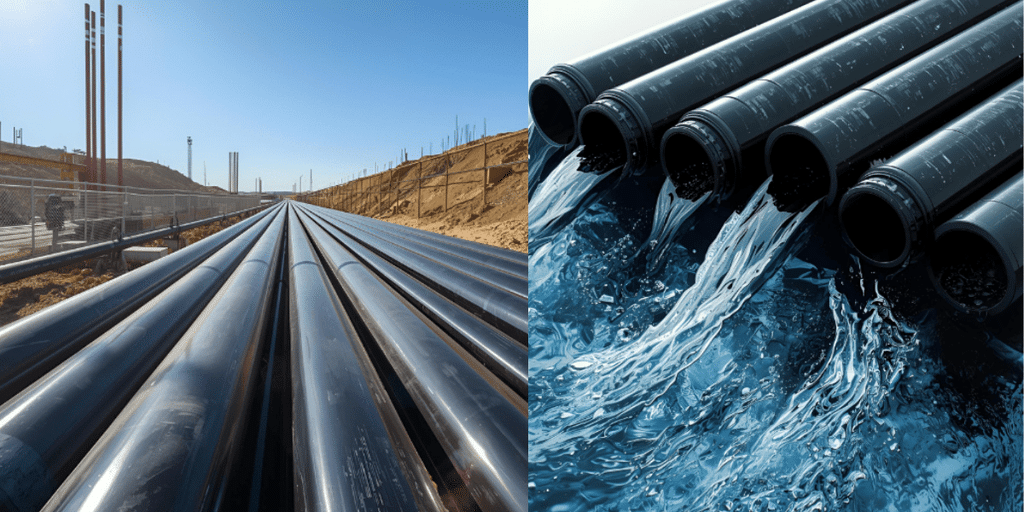
One of the most important applications of HDPE pipes is water supply and distribution. These pipes are used to transport drinking water from treatment plants to storage facilities, residential areas, commercial buildings, and industrial locations. Their corrosion-resistant properties help maintain the reliability of water distribution networks.
HDPE pipes can be joined using suitable fusion methods, creating strong, leak-resistant connections when installed correctly. This makes them useful for municipal water projects, underground pipelines, and large-scale water distribution systems. Buyers working with an experienced HDPE Pipes Supplier in Argentina can select appropriate pipe dimensions and pressure ratings according to their project requirements.
2. Agricultural Irrigation Systems
Agriculture requires efficient water management to support healthy crop growth and improve productivity. HDPE pipes are commonly used in agricultural irrigation systems to carry water from reservoirs, wells, tanks, and pumping stations to farms and fields.
These pipes are suitable for drip irrigation, sprinkler irrigation, and other water distribution systems. Their flexibility allows installation across different types of agricultural land, while their resistance to corrosion helps reduce maintenance needs. Farmers can use properly selected HDPE pipelines to distribute water efficiently and support better irrigation planning.
3. Industrial Fluid Transportation
Many industries need reliable piping systems to transport water, process fluids, and compatible chemicals. HDPE pipes are used in manufacturing plants, processing facilities, industrial estates, and other commercial operations.
Their resistance to corrosion and many chemicals makes them useful in suitable industrial environments. However, chemical compatibility, operating temperature, pressure, and fluid characteristics must be checked before selecting a pipe. An experienced supplier can help industrial buyers identify products that meet the technical requirements of their applications.
4. Mining and Mineral Processing
Argentina has mining operations that require durable piping systems for water management, mineral processing, and the transportation of suitable industrial fluids. HDPE pipes are used in mining applications because they offer good resistance to corrosion, abrasion, and impact when the correct pipe grade is selected.
These pipes can be used for slurry transportation, mine drainage, process water supply, tailings management, and compatible chemical solutions. Their flexibility is helpful when pipelines must pass through challenging terrain, including remote and elevated locations.
5. Oil and Gas Industry
The oil and gas industry requires piping systems designed to meet strict safety and operating requirements. HDPE pipes can be used in suitable applications such as water transportation, drainage, utility networks, and certain gas distribution systems where the pipe material and product certification are appropriate.
Their resistance to corrosion makes them useful in environments where conventional metal piping may face rust-related maintenance challenges. However, gas transportation requires pipes specifically approved for that service and installed according to applicable standards.
6. Sewage and Wastewater Management
HDPE pipes are widely used in wastewater collection, sewage transportation, and drainage systems. Municipal authorities, industrial facilities, and infrastructure developers can use them to carry wastewater to treatment plants and designated disposal facilities.
Their resistance to corrosion and many chemicals makes them suitable for selected wastewater applications. Properly designed joints can help reduce leakage and protect surrounding soil and groundwater. These characteristics make HDPE piping a valuable option for modern sanitation and wastewater infrastructure.
7. Stormwater Drainage Systems
Heavy rainfall and surface runoff can create drainage challenges in urban, industrial, and agricultural areas. HDPE pipes are used in suitable stormwater drainage systems to collect and transport rainwater away from roads, buildings, industrial sites, and developed land.
Depending on the project, smooth-wall or corrugated HDPE pipes may be selected for pressure or non-pressure drainage applications. Their lightweight construction can simplify transportation and handling, while their durability makes them suitable for many underground installations.
8. Power Plants and Industrial Utilities
Power generation facilities and industrial plants use piping systems for cooling water, utility water, drainage, and other compatible fluid transportation needs. HDPE pipes can be a suitable choice for selected underground and above-ground utility networks.
Their relatively low weight and resistance to corrosion can simplify handling and help reduce maintenance requirements. Engineers should consider operating temperatures, pressure conditions, and relevant safety standards before selecting HDPE pipes for power plant applications.
9. Chemical Processing Plants
Chemical processing facilities require pipes that can safely handle specific liquids under defined operating conditions. HDPE pipes are suitable for transporting many compatible chemicals, industrial wastewater, and process fluids.
Their resistance to rust and a range of chemical substances makes them useful in selected manufacturing and processing applications. However, not every chemical is compatible with HDPE, so engineers should verify chemical concentration, temperature, pressure, and material compatibility before installation.
10. Electrical and Telecommunication Cable Protection
HDPE pipes are also used as protective ducts for electrical cables, fibre-optic cables, and telecommunication networks. These ducts help protect cables from soil pressure, moisture, and mechanical damage when the correct product and installation method are used.
They are useful in underground communication networks, road infrastructure, industrial campuses, and urban development projects. Their flexibility can make it easier to route cables around obstacles and through suitable underground pathways.
11. Fisheries and Aquaculture
Fish farms and aquaculture facilities require piping systems to supply water, manage circulation, and support drainage. HDPE pipes can be used in suitable freshwater and seawater installations because of their corrosion resistance and flexibility.
They may be used for water intake, pond filling, drainage, and water circulation systems. Selecting the appropriate pipe diameter and flow capacity helps maintain efficient water movement and supports the operational requirements of aquaculture facilities.
Benefits of Choosing HDPE Pipes
1. Excellent Durability and Long Service Life
One of the main benefits of HDPE pipes is their excellent durability. They are manufactured from high-density polyethene, a strong thermoplastic material that can withstand normal operating pressures when the correct pipe grade and dimensions are selected.
These pipes are suitable for underground installations, water distribution networks, agricultural irrigation systems, and industrial pipelines. Their resistance to many common environmental conditions helps reduce the need for frequent repairs and replacements.
2. High Resistance to Corrosion
Unlike conventional steel pipes, HDPE pipes do not rust. They also resist many forms of chemical corrosion that can affect metal piping systems. This makes them useful in applications where moisture, soil conditions, or compatible industrial chemicals may damage other materials.
Their corrosion resistance helps maintain the condition of the pipe and reduces the risk of deterioration caused by rust. This is particularly valuable for underground water pipelines, agricultural installations, and selected industrial applications.
3. Lightweight and Easy to Handle
HDPE pipes are lighter than many traditional piping materials. Their low weight makes transportation, handling, loading, and installation easier when compared with heavier alternatives.
This benefit can be useful for construction companies, infrastructure contractors, and agricultural businesses working across different regions of Argentina. Depending on pipe diameter, length, and installation conditions, lightweight pipes may reduce equipment requirements and simplify site logistics.
4. Flexible and Suitable for Different Terrains
Flexibility is another important advantage of HDPE pipes. They can accommodate certain ground movements, and installation bends more effectively than many rigid piping materials, provided the minimum bending radius and installation guidelines are followed.
This feature is useful for underground pipelines and irrigation networks installed across varying landscapes. It can also help simplify pipeline routing and reduce the need for some fittings. Proper trench preparation, bedding, backfilling, and installation practices remain essential to ensure reliable performance.
5. Leak-Resistant Jointing System
HDPE pipes can be joined using suitable fusion techniques, including butt fusion and electrofusion. When these joints are prepared and completed correctly, the resulting connections can be highly reliable and leak-resistant.
Fewer leakage problems can help conserve water, reduce maintenance requirements, and improve the efficiency of water distribution systems. For municipalities, agricultural operators, and industrial users in Argentina, choosing the correct joining method and qualified installation personnel is important for achieving dependable pipeline performance.
6. Smooth Inner Surface for Efficient Water Flow
HDPE pipes have a smooth internal surface that helps water and other suitable fluids flow efficiently. The smooth bore reduces friction losses and can help limit the buildup of deposits under appropriate operating conditions.
For agricultural irrigation, water distribution, and industrial fluid transportation, this feature can contribute to effective system performance. Proper pipe sizing and hydraulic calculations are still necessary to achieve the required flow rate and pressure.
7. Lower Maintenance Requirements
HDPE pipes are resistant to rust and many forms of chemical deterioration. Their reliable fusion joints and durable construction can reduce the frequency of maintenance associated with corrosion and leaking connections.
For large projects, fewer repairs can mean less downtime, lower labour expenses, and reduced disruption to daily operations. These benefits make HDPE pipes a practical option for long-term water supply networks, drainage systems, and industrial pipelines.
8. Resistance to Impact and Ground Movement
HDPE pipes offer good impact resistance and flexibility. These properties can help them withstand handling stresses and certain ground movements during service.
In Argentina, where pipeline projects may involve different soil conditions and installation environments, the correct pipe design is essential. Engineers should consider operating pressure, soil loading, temperature, installation depth, and expected ground movement when selecting a suitable piping system.
9. Suitable for Agricultural Irrigation
Agriculture is an important application for HDPE piping systems. They can be used in drip irrigation, sprinkler irrigation, water transfer, and other agricultural water distribution networks.
Their flexibility and corrosion resistance make them useful for farms that require dependable water transportation over long distances. A properly designed HDPE irrigation system can also help manage water distribution efficiently and reduce losses caused by leaking connections.
10. Versatile Industrial Applications
HDPE pipes are used in a wide range of industrial applications, including chemical transportation, wastewater handling, mining operations, and industrial water supply. Their resistance to abrasion and many chemicals makes them suitable for selected demanding environments.
Before purchasing, buyers should confirm that the pipe material, pressure rating, temperature range, and chemical compatibility meet the requirements of the intended application.
11. Cost-Effective Installation
Although the initial purchase price varies according to pipe diameter, pressure rating, material grade, and supplier, HDPE pipes can provide long-term cost advantages through simpler handling, efficient joining methods, and reduced maintenance requirements.
Fusion joining may also reduce the number of mechanical fittings required in suitable pipeline designs. Buyers should compare the total installed cost rather than considering only the price per metre.
How to Choose the Right HDPE Pipes Supplier in Argentina
Choosing a dependable supplier is an important part of planning any piping project. Buyers should evaluate several factors before placing an order.
Product Quality: Ask for technical specifications, material grades, dimensional information, pressure ratings, and relevant quality documentation.
Correct Pipe Dimensions: Confirm the outside diameter, wall thickness, pressure class, and required pipe length. These specifications should match the engineering design.
Application Requirements: Explain whether the pipes will be used for irrigation, water supply, industrial operations, drainage, or mining. This information helps determine material suitability.
Standards and Certifications: Check compliance with the standards required for the intended application in Argentina. For drinking-water projects, verify applicable approvals and documentation.
Supply and Delivery: Confirm available quantities, manufacturing lead times, packaging, shipping arrangements, and delivery schedules.
Technical Support: Clear communication about installation methods, joining requirements, and product specifications can help prevent procurement errors.
Stark Industries can be contacted to discuss product requirements and explore suitable HDPE piping options for buyers serving the Argentine market.
Why Choose Stark Industries
1. High-Quality HDPE Pipes
Quality is one of the most important factors when selecting an HDPE pipes supplier in Argentina. High-quality pipes are manufactured using suitable polyethene materials and controlled production processes to provide consistent dimensions, strength, and performance. Reliable suppliers can provide product specifications and relevant quality documentation to help buyers evaluate whether the pipes meet their application requirements.
2. Excellent Corrosion Resistance
HDPE pipes offer excellent resistance to corrosion, rust, and many commonly encountered chemicals. Unlike conventional metal pipes, they do not rust when exposed to moisture. This makes them suitable for water transportation, agricultural irrigation, wastewater systems, and many industrial applications. Choosing a supplier that understands your operating environment helps ensure that the selected pipe material is appropriate for the intended use.
3. Durable and Long-Lasting Solutions
Durability is another important reason to choose an experienced HDPE pipes supplier in Argentina. HDPE pipes provide good impact resistance and flexibility, helping them withstand many common handling and installation challenges. When correctly selected, installed, and operated within their specified pressure and temperature limits, they can provide a long service life and help reduce the frequency of repairs and replacements.
4. Suitable Pipes for Different Applications
Every project has different piping requirements. An established supplier can help customers choose HDPE pipes for applications such as drinking water distribution, agricultural irrigation, drainage, wastewater transportation, mining, and industrial fluid handling. Pipe diameter, wall thickness, pressure rating, and material grade should be selected according to the specific operating conditions.
5. Cost-Effective Piping Solutions
HDPE pipes can offer long-term cost advantages because they are lightweight, resistant to corrosion, and relatively easy to handle. Their flexibility may also simplify installation in suitable ground conditions. Reduced maintenance requirements can contribute to lower lifecycle costs. A dependable supplier helps buyers compare specifications and pricing to identify a solution that fits their technical needs and budget.
6. Expert Technical Support
Technical guidance can make a significant difference when planning a piping project. A professional supplier should help customers understand pipe dimensions, pressure classifications, joining methods, and installation requirements. This support is particularly valuable for large infrastructure, agricultural, and industrial projects where incorrect pipe selection may lead to delays or additional expenses.
7. Reliable Supply and Timely Delivery
Project schedules often depend on the timely availability of piping materials. Choosing a supplier with dependable inventory management, clear delivery commitments, and suitable logistics arrangements can help businesses coordinate installation work more efficiently. For buyers in Argentina, it is also useful to confirm shipping arrangements, delivery locations, order quantities, and expected lead times before placing an order.
8. Flexible and Lightweight Design
HDPE pipes are lighter than many traditional metal piping alternatives, which can simplify transportation, handling, and installation. Their flexibility allows them to accommodate certain ground movements and curved pipeline routes, depending on the design and installation method. These characteristics make them useful for a variety of agricultural, municipal, and industrial projects.
9. Support for Agricultural Irrigation
Agriculture is an important application for HDPE piping systems. These pipes can be used to transport water from storage facilities and pumping stations to irrigation networks. Their resistance to corrosion and flexibility make them suitable for many outdoor environments. Selecting the appropriate pipe diameter and pressure rating helps maintain reliable water distribution throughout the irrigation system.
10. Compliance with Project Requirements
A professional HDPE pipes supplier should be able to explain applicable product standards and provide supporting technical documentation when required. Buyers should verify compliance with the specifications relevant to their project, including applicable ISO standards, local regulations, pressure requirements, and potable-water approvals where necessary. This helps ensure that the supplied pipes are appropriate for their intended service.
Frequently Asked Questions (FAQs)
1. What are HDPE pipes used for
HDPE pipes are used for water supply, irrigation, drainage, wastewater management, industrial fluid transportation, and selected mining applications.
2. Why are HDPE pipes suitable for agricultural projects in Argentina
Their flexibility, corrosion resistance, and availability in different sizes make them useful for agricultural water distribution and irrigation systems.
3. How do I select an HDPE Pipes Supplier in Argentina
Compare product specifications, quality documentation, pricing, delivery timelines, export capabilities, and customer support before making a decision.
4. Are HDPE pipes resistant to corrosion
Yes. HDPE does not rust like conventional steel. However, chemical compatibility and environmental conditions should still be evaluated for the intended application.
5. Can HDPE pipes be used for drinking water
Yes, provided the pipes, fittings, and jointing materials meet the applicable potable-water requirements and are installed correctly.
6. What information is needed to order HDPE pipes
Buyers should provide pipe diameter, pressure rating, SDR, required quantity, intended application, applicable standards, and delivery location.
7. Why consider Stark Industries for HDPE pipes
Stark Industries can be evaluated as a potential sourcing partner. Buyers should confirm its available products, technical specifications, quality documents, and export arrangements before ordering.
8. What affects the price of HDPE pipes
Price depends on pipe diameter, wall thickness, material grade, pressure rating, order quantity, shipping costs, and applicable import duties.
Conclusion
HDPE pipes are an effective piping solution for many water distribution, irrigation, industrial, mining, construction, and drainage applications. Their corrosion resistance, lightweight structure, flexibility, and potential for long service life make them suitable for numerous projects when correctly specified and installed.
Stark Industries can be contacted to discuss your HDPE pipe requirements and explore suitable industrial piping solutions. With proper product selection and installation planning, businesses can develop efficient piping systems that support dependable operations and long-term project performance.